
The Spring Seller’s Blind Spot
Why “Ready to List” and “Ready to Sell” Aren’t the Same Thing
Every spring, the same thing happens.
A homeowner spends two weeks cleaning. They repaint the front door. They declutter the counters.
They tell their realtor: we’re ready.
And they are ready — to list.
But ready to list and ready to sell are not the same thing. In Halifax’s spring market, that gap is exactly where offers get lost.
According to the National Association of Realtors’ 2025 Profile of Home Staging, 83% of buyers’ agents say staging makes it easier for buyers to visualize a property as their future home, a key factor in motivating offers. Industry research from the Real Estate Staging Association also shows that staged homes can sell up to three times faster than unstaged properties. And long before a buyer evaluates square footage or finishes, they’ve already formed an emotional impression of the space.
The Spring Buyer Is Different
Spring buyers are not the same as January browsers.
By March and April, they have been watching the market for months. They are motivated, pre-approved, and comparing multiple properties in a single weekend. They move quickly, and when they find a home that feels right, they make an offer.
But here is what most sellers don’t account for: spring buyers are also comparing. More inventory means more options. And in a market where buyers have choices, the homes that create an immediate emotional response win. The ones that require imagination, that ask buyers to mentally renovate, restyle, or overlook, get passed over.
The spring window is real. And it is shorter than sellers think.
“Clean” Is Not a Competitive Advantage
Clean is the minimum.
Every home that lists in the spring market will be clean. Many will be freshly painted. Most will have had something done to prepare. In a competitive market, clean does not differentiate, it simply qualifies you to compete.
What creates a competitive advantage is how a home reads to a buyer in the first thirty seconds of a showing.
Does the layout feel open or crowded?
Does the light feel bright or heavy?
Does the room feel like a lifestyle, or like someone else's furniture?
Those impressions are not accidental. They are the result of deliberate staging decisions — furniture scale, sightline management, texture, and light. A home that has been strategically staged answers every one of those questions before a buyer has time to form doubt.
Clean says: this home is cared for.
Staging says: this home is ready for your life.
Only one of those closes deals.
The Emotional Window Is Short, and It Doesn't Reopen
Spring buyers don't come back.
This is the part most sellers discover too late. In a season with high buyer motivation and increasing inventory, a buyer who walks through your home and feels underwhelmed does not schedule a second showing. They move on to the next listing.
The first showing is the only showing that matters.
And increasingly, the first showing happens online, before a buyer ever sets foot in the door. Listing photos are the first showing. If your home doesn't photograph with presence and clarity, a significant portion of your buyer pool has already moved on before your open house.
Strategic staging does two things simultaneously:
It makes your home photograph exceptionally well, and it ensures that the experience of walking through the home matches, or even exceeds, what buyers saw in the photos.
When those two things align, buyers feel certainty. And certainty drives offers.
Because when a home feels right the moment buyers walk in, hesitation disappears.
73%
Industry data from the Real Estate Staging Association shows that staged homes sell up to 73% faster than unstaged ones. In a spring market where buyer attention is high and patience is not, that gap is significant.
Real Estate Staging Association
What Spring-Ready Staging Actually Looks Like
Spring staging is not about adding flowers or swapping throw pillows.
It is about ensuring your home communicates clearly to a buyer who is moving fast and comparing actively.
That means:
Sightlines first. The moment a buyer steps inside, they should be able to see through the space. Furniture that blocks pathways or interrupts natural flow creates immediate subconscious friction. We clear it.
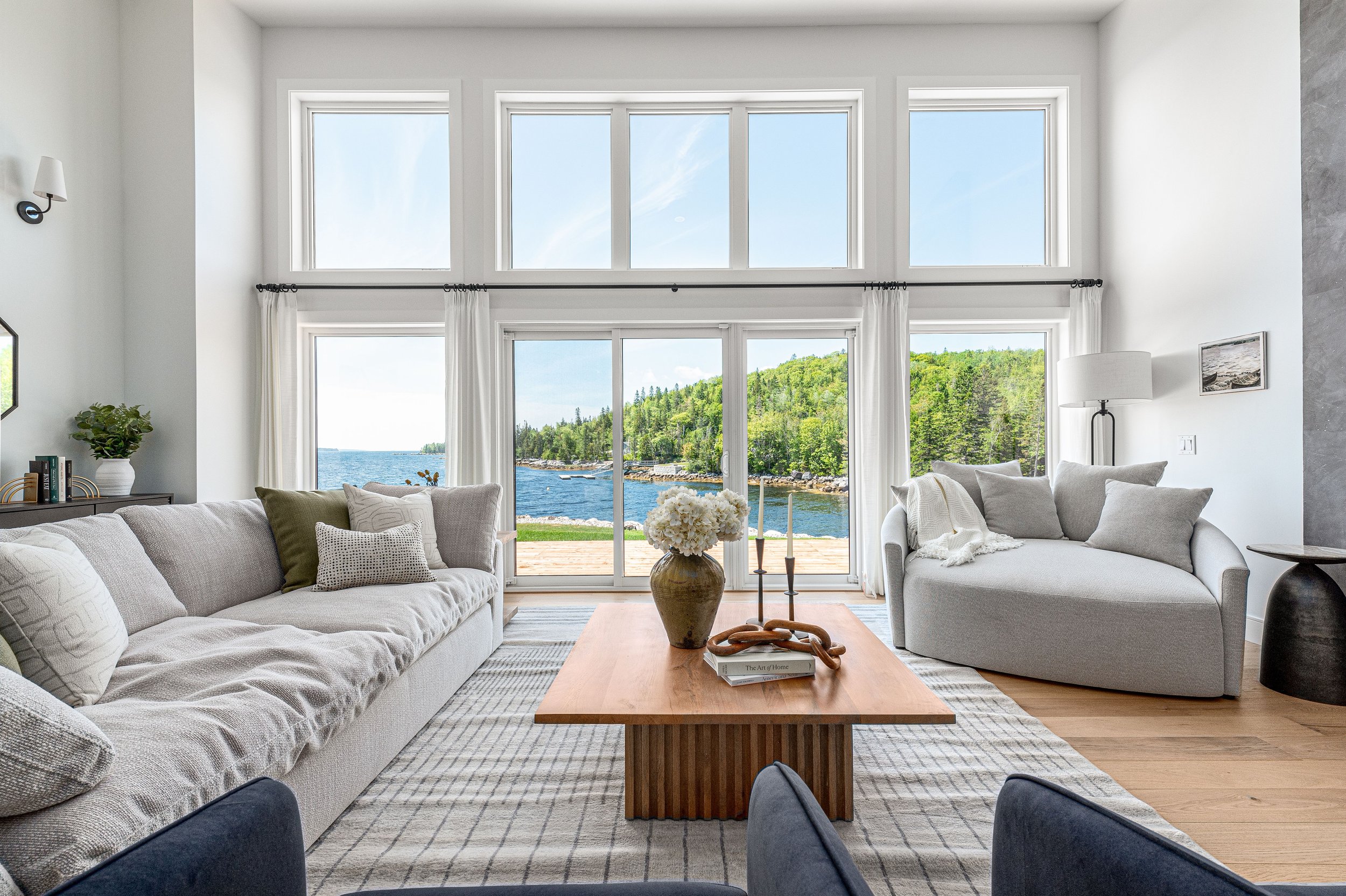
Light, maximized. Spring light is one of your home's most powerful assets. Sheer window treatments, mirrors placed to reflect natural light, and lamps staged for photography all contribute to a home that feels bright, alive, and welcoming, on camera and in person.
Scale that fits the room. Oversized furniture makes rooms feel small. Under-furnished rooms feel cold and undefined. Strategic staging calibrates scale so that every room feels spacious, purposeful, and proportional.
Neutral, elevated, and buyer-ready. Personal decor narrows buyer appeal. Elevated neutrals — layered textures, natural materials, restrained styling, broaden it. According to the National Association of Realtors, 81% of buyers' agents say staging helps buyers visualize a property as their future home, and visualization is what converts a showing into an offer.
The Consultation Conversation
The best time to have the staging conversation is before photos are booked.
Once a photographer is scheduled, the timeline compresses and decisions get made under pressure. Staging done after photos, or worse, after the first open house, is reactive. It costs more time and more money than staging done strategically from the start.
A pre-listing consultation with Charlotte Interiors covers exactly this ground:
Which rooms are driving perceived value, and which are working against you
What buyers in the current Halifax market are responding to
What to change, what to remove, and what to add before the camera arrives
How to position your home to compete at the top of its price range